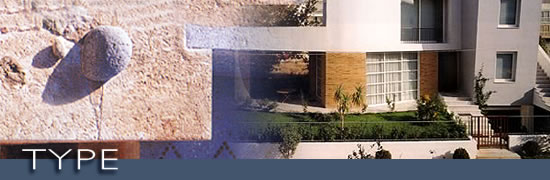
The buildings most characteristic of urban Athens, the apartment building
and the suburban residential development, result from the particular
conditions of the Hellenic capital: small landownership, limited state
resources, small-scale construction businesses, and the vitality of
the populace. The implementation of these two building types would,
on the one hand, quickly solve the acute problem of housing the city’s
inhabitants, but, on the other hand, would have negative consequences
as this did not take place within the proper regulatory framework, nor
was it accompanied by the requisite technical and social infrastructure.
The modern schools and apartment buildings of the 1930s, the tourist
facilities and single-family houses of the 1960s and the urban renovation
and historic building restoration that took place in the period 1975-2002,
hold pride of place in modern Athenian architecture. The remarkable
architectural accomplishments in these categories constitute Athens’
most important contribution to world architecture.